
Flat Roofing in Dallas, TX
Flat and low-slope roofs play by different rules — drainage, not slope, keeps them dry. DFW Roofing LLC provides flat roofing in Dallas, TX: repairs, replacements, and new installations for homes, additions, and commercial buildings using TPO, EPDM, and modified bitumen membranes. Insured, free inspections, and a workmanship warranty.
Common Flat Roofing Problems We Fix
If you’re dealing with any of these issues, our Flat Roofing service can help.
Ponding / Standing Water
Water that sits for days after rain is the #1 enemy of flat roofs — it stresses seams, feeds leaks, and adds dangerous weight to the structure.
Membrane Punctures
Foot traffic, dropped tools, and debris puncture single-ply membranes. Small holes let in surprising amounts of water before anyone notices.
Seam Failures
Whether heat-welded or adhered, seams are where membrane roofs fail first. Separated seams let water spread underneath across wide areas.
Clogged Drains & Scuppers
Leaves and debris block internal drains and scuppers, backing water up across the roof and turning a maintenance issue into a leak.
Parapet & Edge Flashing Failures
Where the flat roof meets parapet walls and edges, flashing details take the most weather abuse — and fail first when neglected.
Membrane Blistering
Trapped moisture and heat blister the membrane surface. Small blisters are cosmetic; large or widespread ones signal a failing system.
Leaks Around Rooftop Penetrations
Vents, pipes, and HVAC curbs punch through flat roofs. Each penetration is a potential leak point if its flashing is not maintained.
Coating Breakdown on Older Roofs
Old coatings chalk, crack, and peel, leaving the membrane beneath exposed to UV and weather. Recoating buys time; a failing membrane needs replacement.
About Our Flat Roofing Service
Flat roofing covers roofs with little or no slope — typically under a 3:12 pitch — found on commercial buildings, modern homes, additions, garages, and covered patios. Because water cannot run off by gravity, flat roofs rely on watertight membrane systems and engineered drainage. The materials and details are completely different from sloped shingle roofs, which is why flat roofing demands a specialist.
Why drainage matters most on flat roofs
Every flat roof problem traces back to water that does not leave. Proper design gives the roof slight slope toward drains, scuppers, or gutters, and keeps those outlets clear. When drainage works, membranes last and leaks stay rare. When it does not, standing water finds every weak seam and flashing detail. That is why our flat roof inspections always start with drainage — fix the water’s path, and you fix the roof’s future.
Flat roofing membrane options
We install the three proven systems: TPO (white, heat-welded seams, excellent in Texas heat), EPDM (tough black rubber with a long track record, especially good for simple roof shapes), and modified bitumen (multi-layer asphalt-based systems valued for durability and straightforward repairs). Each has real strengths; the right pick depends on your roof’s shape, use, and budget. We explain the practical differences plainly and recommend what fits your building.
TPO has become the most widely installed single-ply system on Dallas commercial roofs. Because it has its own installation and repair considerations, we cover it on a dedicated page: TPO Roofing.
Keeping a flat roof healthy
Flat roofs reward simple maintenance: keep drains and scuppers clear, remove debris and standing branches, limit foot traffic to service paths, and fix small punctures quickly. A routine professional inspection catches seam and flashing issues while they are still minor. Our free inspections include a drainage and membrane check — see our commercial roofing page for business properties, or Dallas service area details for where we work.
Tapered insulation: fixing ponding by design
When a flat roof ponds because its structure has no fall, resurfacing alone will not cure it — the water has nowhere new to go. Tapered insulation solves the problem by design: rigid insulation boards are laid in a planned gradient that builds slope toward the drains, so the new membrane sits on a surface that actually sheds water. It is the durable fix for chronic ponding, and whether your roof needs it is something our free inspection and drainage check can establish.
EPDM Rubber Roofing
EPDM is a synthetic rubber membrane used on flat and low-slope roofs for decades. It comes in large sheets, which means fewer seams across the roof, and its seams are sealed with adhesives or seam tape rather than heat welding. The membrane stays flexible in cold weather and handles the expansion and contraction of Texas temperature swings well. EPDM is a practical choice for commercial buildings and low-slope residential sections where a straightforward, proven single-ply system fits the budget. Repairs are typically simple: damaged areas can be patched with EPDM material and primer, and seams can be re-sealed. If your building has an EPDM roof that leaks at the seams or around penetrations, we inspect it free and tell you honestly whether a repair or a replacement makes sense.
Modified Bitumen Roofing
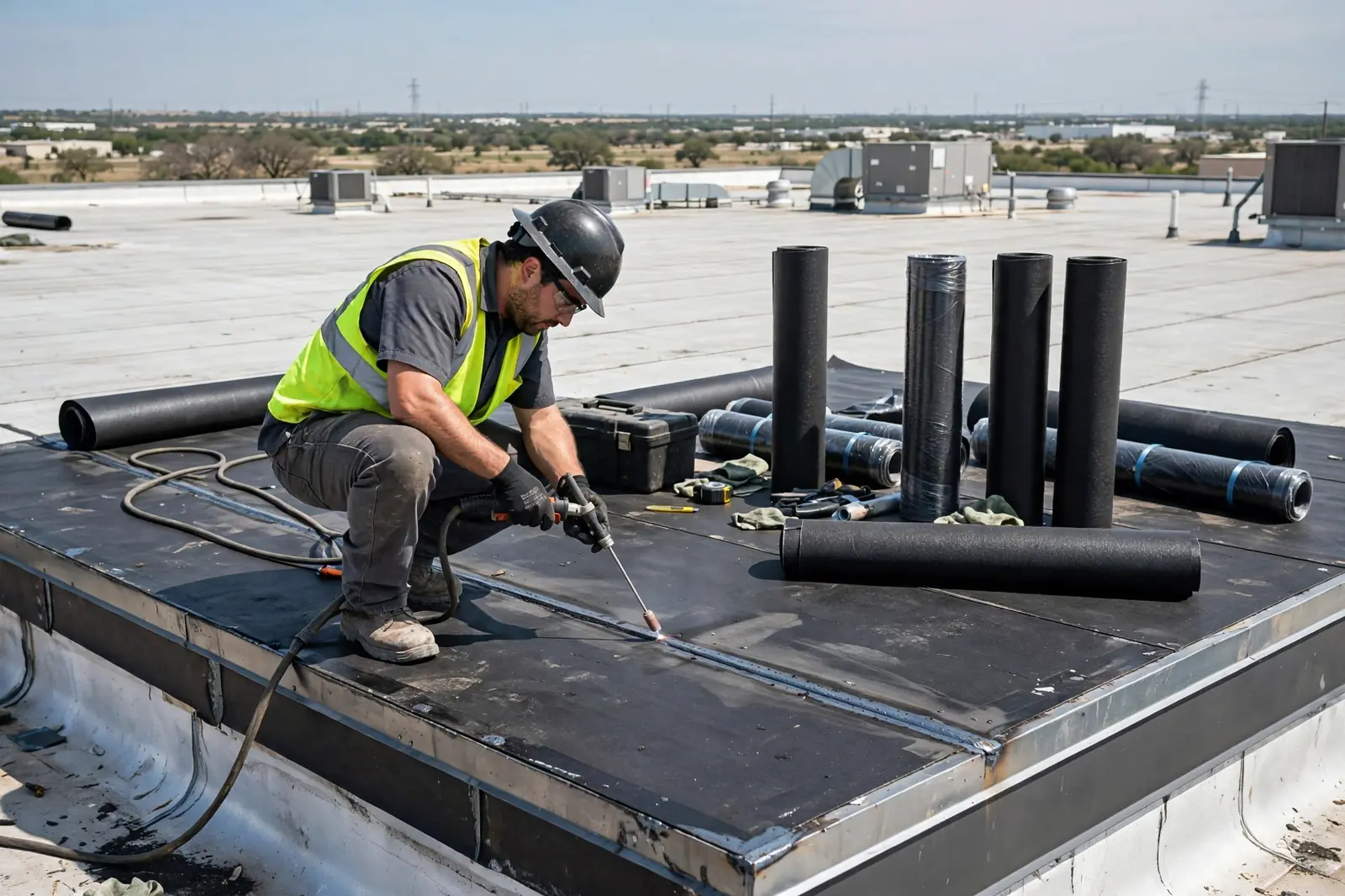
Modified bitumen — often shortened to “mod bit” — is an asphalt-based roofing system reinforced with fiberglass or polyester and modified with polymers for flexibility and strength. It is installed in multiple plies, and many systems have a granulated surface similar to a shingle’s, which protects the roof from foot traffic and weather. Modified bitumen is commonly chosen for smaller commercial roofs, multi-family buildings and low-slope sections where rooftop traffic is expected. Its multi-ply build gives it good puncture resistance, and repairs can usually be made by patching the damaged ply. During a free inspection we check for blistering, splitting and open laps, and explain whether targeted repairs can extend the roof’s life.
Our Flat Roofing Process
Simple, transparent, and hassle-free from start to finish.
Free Roof Inspection
Call (972) 853-6474 or request an estimate. We inspect the membrane, seams, flashing, and — critically — the drainage.
System Recommendation & Estimate
We recommend the right membrane system for your roof and provide a clear, itemized written estimate.
Installation or Repair
We complete the work with proper slope-to-drain detailing, watertight flashing, and daily cleanup.
Final Review & Maintenance Guidance
We walk the finished roof with you and outline simple maintenance that protects your investment.
Why Choose DFW Roofing LLC for Flat Roofing
A local Dallas roofing company you can rely on.
Insured
Full insurance coverage for your protection on every job, large or small.
Free Detailed Inspections
Thorough roof assessments — so you know exactly what your roof needs before spending a dollar.
Clear Upfront Pricing
Itemized written estimates with honest recommendations. No hidden fees, no surprise add-ons.
Workmanship Warranty
Every repair is backed by our workmanship warranty for lasting peace of mind.
Flat Roofing and Related Roofing Services
Explore other services that pair well with flat roofing.
Commercial Roofing
Flat and low-slope systems for offices, warehouses, and retail buildings.
Explore Commercial Roofing →Roof Repair
Targeted repairs for membrane punctures, seam failures, and leaks.
Explore Roof Repair →Roof Installation
New roof installations for additions, remodels, and new construction.
Explore Roof Installation →Flat Roofing Service Areas
We proudly provide flat roofing across Dallas and surrounding DFW communities.
Flat Roofing FAQs
Answers to common questions about our flat roofing service.
Ponding usually means inadequate slope to drains, clogged drains or scuppers, or structural sagging. Standing water accelerates membrane and seam failure, so it is worth addressing promptly — our inspection identifies the cause and the fix.
TPO is a white heat-welded membrane that reflects Texas heat well. EPDM is a durable black rubber membrane with a long history. Modified bitumen is a multi-layer asphalt system known for toughness and easy repairs. We recommend based on your roof’s shape, use, and budget.
Isolated punctures or a few bad seams on a sound membrane are repairable. Widespread seam failure, saturated insulation, or persistent ponding point to replacement. Our free inspection includes a moisture assessment for an evidence-based answer.
Most flat roof damage is repairable: punctures get patched, failed seams get re-welded or resealed, and flashing gets rebuilt. Replacement becomes the smart move only when damage is widespread or the membrane itself is worn out.
Keep drains and scuppers clear of debris, remove branches and standing objects, minimize foot traffic, and repair small punctures promptly. A professional inspection after major storms and every couple of years catches small issues early — ours are free.
Need Flat Roofing in Dallas, TX?
Flat roofs need a specialist — get one. Call DFW Roofing LLC for a free flat roof inspection and an honest, itemized estimate.
☎ Call NowRequest an Estimate