
How to Spot Hail Damage on a Roof
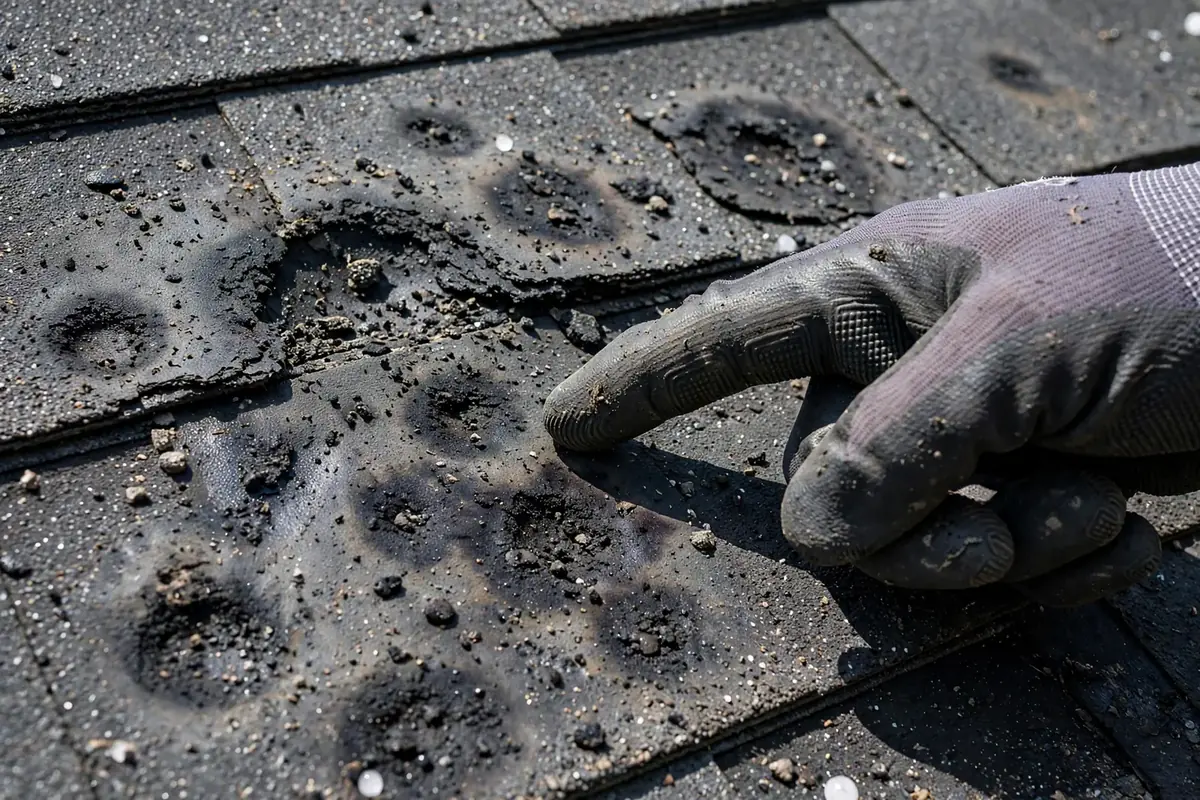
Direct answer: Start at ground level with the soft metals. Dents in gutters, downspouts, vent caps, flashing and window screens show that hail reached a size that can also bruise shingles. On the roof itself, hail typically leaves scattered dark marks where granules have been knocked away, sometimes with a soft feel under pressure, plus piles of loose granules where downspouts discharge.
Not every mark is visible from the ground, and not every mark is hail. If soft metals are dented or granules are washing out, treat that as a reason for a close, on-roof inspection rather than a diagnosis on its own. That inspection is what separates genuine impact damage from wear, blistering and older repairs.
Start from the ground
You do not need to climb up to get clues. After a hailstorm, walk the property and look at metal parts first: gutters, downspouts, vents, the garage door and window screens. Dents and dings there tell you hail of a damaging size fell.
Work through the outside in a set order: soft metals, then the ground beneath the eaves for dislodged granules and shingle fragments, then each roof slope you can see from the street or garden. Binoculars can help you spot lifted or cracked shingles without leaving the ground. Note which slopes faced the approaching storm, because impact marks often concentrate there and on ridge caps and hips.
Do not climb onto a wet or damaged roof to check for yourself. Granule loss makes shingles slippery, damaged decking may not be obvious, and walking on bruised shingles can worsen the marks you are trying to document. Photograph what you can see from the ground, including close views of dented metal and any granules collected at downspout exits, and keep a note of the storm date and approximate time.
What hail does to shingles
On asphalt shingles, hail leaves random, round bruises where the granules have been knocked off and the dark mat shows through. The spot may feel soft when pressed. Damage often clusters on slopes facing the storm.
- Round dark spots or bare patches
- Granules collected in gutters or at downspout exits
- Cracks or splits in the shingle surface
- Dents in roof vents, flashing or ridge caps
A hail bruise matters because the protective granule surface has been displaced and the underlying mat may be fractured. That spot can then age faster than the surrounding shingle, shed more granules in later rain and become a weaker point in wind. A single cosmetic mark on a metal panel is different: metal roofing and metal trim often show dents that affect appearance without opening a path for water, which is why the material underneath and the pattern of marks both matter.
Marks that are not always hail
Several common conditions can look like hail from a distance. Blisters form as small raised bumps and can pop to leave a pinhole rather than a bruise. Normal ageing tends to shed granules more evenly and makes shingles brittle or curled at the edges. Scuffs from foot traffic, fallen branches or previous work usually follow a path or cluster in one worked area, whereas hail impacts are scattered at random across a slope and turn up on the soft metals around the house as well. This guide covers identification only; for the full sequence of checks after any storm, see our roof checklist after a storm.
Why a close inspection matters
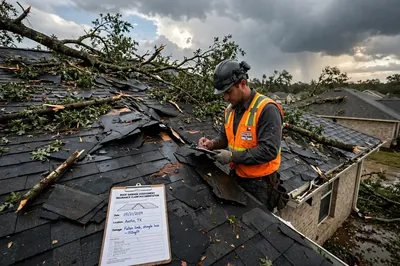
Hail damage can be hard to tell apart from blistering, manufacturing defects or normal aging. Someone who has seen a lot of roofs can usually sort one from the other quickly, and photos taken up close help if you decide to file a claim.
Warning signs that need a prompt inspection
Book an inspection promptly if a storm has left dented gutters or vents, if shingle fragments or heavy granule deposits appear after rain, if a ceiling stain follows the storm, or if neighbouring properties are having roofs examined for impact damage. North Texas spring storms can bring hail alongside driving rain and strong gusts, so hail marks sometimes arrive with lifted tabs and damaged flashing that are easier to miss. Our hail damage roof repair service covers the inspection, documentation and repair of impact damage, and wider problems involving wind or driven rain are handled under storm damage roof repair. Where marks turn out to be isolated and the roof is otherwise sound, straightforward roof repair may be all that is required.
What to do next
Photograph any damage, note the storm date, and have the roof inspected. Read your policy for the wind and hail deductible before deciding whether to file. Do not arrange repairs that cover up impact marks before they have been photographed up close, and be cautious with anyone who offers to confirm damage without actually inspecting the roof surface and the soft metals.
DFW Roofing LLC offers free inspections in Dallas and nearby cities. Call (972) 853-6474 and tell us the storm date and what you found from the ground, and we will examine the slopes, vents and flashing and explain what the marks actually are before any repair is discussed.
Common questions about hail damage
Can hail damage be seen from the ground?
Some clues can, including dents in gutters, downspouts and vents, granules at downspout exits and shingle pieces in the yard. The bruises on the shingles themselves are often too small or too scattered to judge from the ground, so a close inspection is the reliable way to confirm them.
Does a hail mark always mean the roof must be replaced?
No. Isolated marks on an otherwise sound roof may need only a repair, while widespread mat damage across several slopes is a different picture. The pattern, depth and spread of the marks, together with the age and condition of the roof, decide what is appropriate.
How soon should a roof be checked after a hailstorm?
As soon as it is safe to do so. Checking promptly preserves a clear link to the storm date, allows photographs to be taken before weather and foot traffic change the marks, and gives you time to read your policy terms before deciding on a claim.