
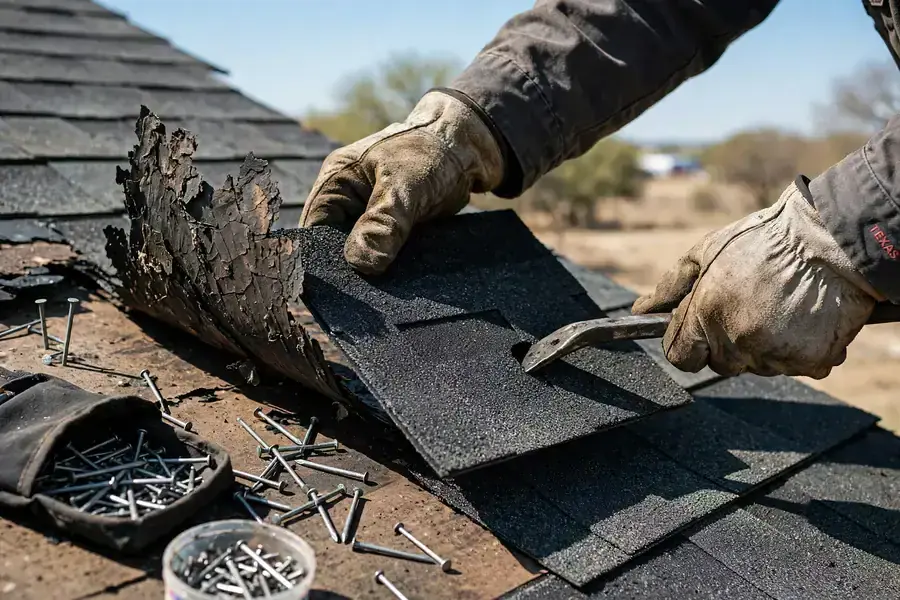
Roof repair fixes a specific fault — a leak, damaged shingles, failed flashing or a worn seal — rather than replacing the whole covering, and it is usually the right step when the damage is localised and the rest of the roof is still sound. A small roof problem rarely stays small: missing shingles, lifted flashing and worn sealant let water in a little at a time, and by the time a stain shows on the ceiling the damage above it has usually been growing for a while. Good repair work means finding the actual cause and fixing that, not just covering the spot where it shows.
Signs you may need roof repair
- Shingles that are cracked, curled, missing or visibly lifted
- Granules collecting in gutters or at the base of downspouts
- Rusted, bent or separated flashing around chimneys, vents and walls
- Daylight, dark streaks or damp insulation in the attic
- Sagging or soft spots when the roof deck is walked
- Water stains, bubbling paint or peeling plaster on ceilings and upper walls
- A musty smell in the attic, or dark patches on the underside of the deck
Some of these signs are easy to spot from the ground, but the source of a leak often is not: water can enter at one point, travel along the deck or a rafter, and only show inside some distance away. If you can see active dripping, a stain that is spreading, or daylight in the attic, that is the point to have the roof looked at rather than watch and wait — a free inspection will show whether a repair is enough.
What our roof repair work includes
- Roof inspection to locate the source, not just the symptom
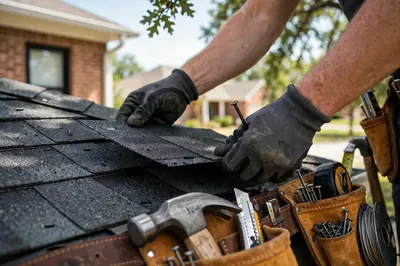
- Shingle, flashing and underlayment repairs
- Resealing of vent pipes, skylights and chimney transitions
- Replacement of damaged decking where it is found
- Clear explanation of whether repair is enough or replacement makes more sense
- Repair of localised storm, hail and wind damage
- Temporary protection, such as tarping, to keep water out until a permanent repair can be made
The work is matched to the roof you have. A shingle roof usually needs individual shingles replaced and resealed; a metal roof more often needs fasteners, seams or a panel attended to; and a low-slope roof needs its seams, membrane and drainage points checked. See shingle roofing, metal roofing and flat roofing for how each system is handled.
What to know in North Texas
North Texas roofs take a lot of heat cycling, with hot afternoons, cold snaps and sudden storms, and that expansion and contraction loosens sealants and fasteners over time. Repairs hold up best when the surrounding material is still sound, so part of any repair visit is checking how much life the rest of the roof has left.
Hail deserves a mention of its own. A storm can bruise shingles and crack seals without tearing anything off, so a roof can look fine from the street while its weatherproofing has been quietly weakened. After a significant hail event, a close inspection is worthwhile even when nothing appears to be leaking yet — our hail damage roof repair page explains what that involves.
How it works
- Call or send a requestTell us your address, what is happening and any photos you have.
- Roof inspectionWe look at the roof, find the cause and explain what we see.
- Written scope and quoteYou get the work, materials and price described before anything starts.
- Work and cleanupThe job is done, the property is cleaned up and we walk through the result.
Roof Repair FAQs
How do I know if my roof needs repair or replacement?
Isolated damage on a roof that is otherwise in decent shape is usually a repair. Widespread granule loss, repeated leaks in different spots, or a roof that is near the end of its expected life points toward replacement. A close inspection is the only reliable way to tell.
Can a roof be repaired in the rain?
Temporary protection such as a tarp can be put on in wet weather, but permanent shingle and flashing repairs need dry conditions to seal and bond properly.
How long does a roof repair last?
There is no single figure, because a repair can only last as long as the materials around it. A repair made with matching materials on a roof that is otherwise sound can serve for the remaining life of that section, while the same repair on an ageing, brittle roof may only buy limited time. What affects it most is the age and condition of the surrounding shingles, how well the new material bonds and seals, whether the underlying cause — such as failed flashing or poor drainage — was fixed as well, and the weather the roof faces afterwards. We will tell you honestly which situation your roof is in before work starts.
How much does roof repair cost?
It depends on what has actually failed, how much material is involved, how accessible the damaged area is, and whether any decking underneath needs replacing. That is why we inspect first and give a written scope and quote before work begins, rather than quoting a figure sight unseen.
Do you repair roofs after storms?
Yes. Storm, hail and wind damage account for a large share of repair work in Dallas, and we are open 24 hours for urgent problems. If water is getting in, the opening can be protected temporarily first, with the permanent repair carried out once conditions allow. Our storm damage roof repair page covers that work in more detail.
Related roofing services
Helpful guides
- Roof Repair or Roof Replacement: How to Decide
- What to Do When Your Roof Starts Leaking
- Roof Checklist After a Storm
Where we provide this service
We work throughout Dallas and nearby communities. Choose your city for local details.