
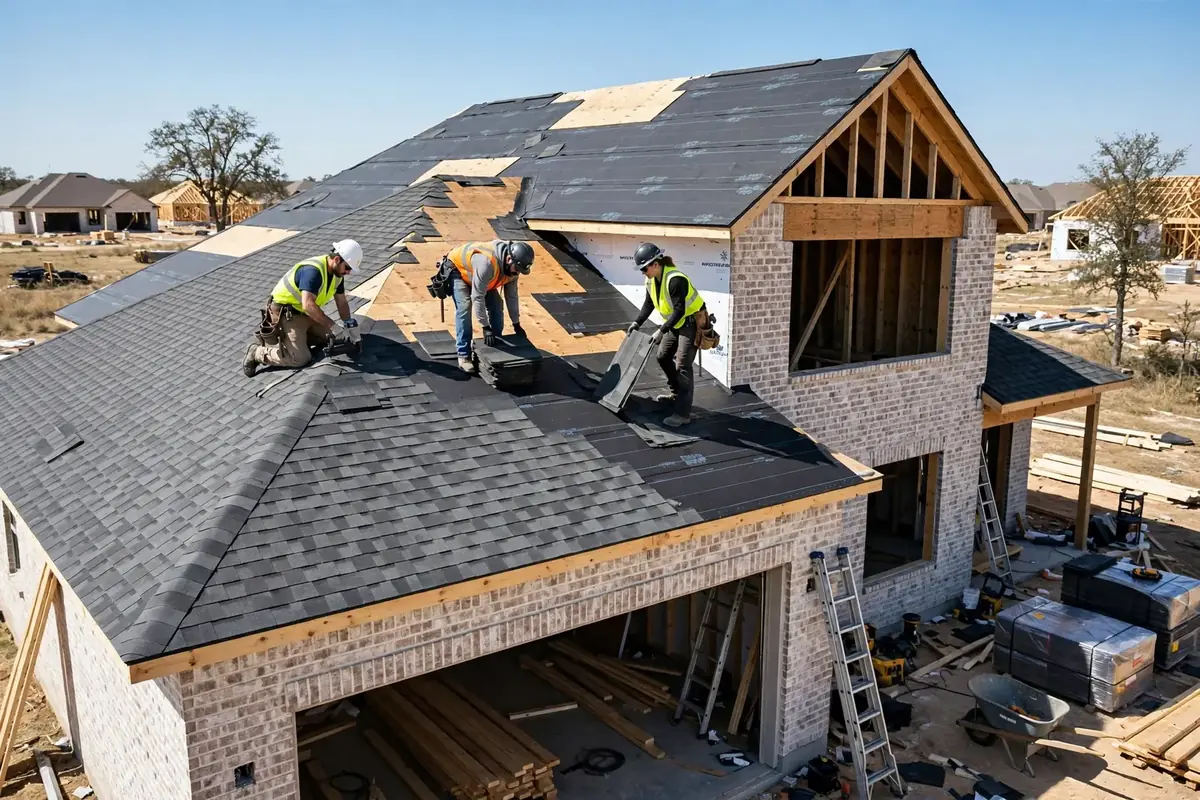
Roof installation means building a complete new roof system — deck covering, underlayment, flashing, ventilation and surface — on a structure that has no existing roof to repair, or where a project changes the roof entirely. It covers new construction, additions, garages and outbuildings. Because there is no old roof to work around, the focus is on getting the deck, underlayment, flashing and ventilation planned correctly from the beginning, while every detail is still easy to reach.
When you need roof installation
- New home construction or a major addition
- A detached garage, carport or workshop that needs a roof
- Converting from one roof type to another
- A remodel that changes the roofline or pitch
- A building that has been sitting with a temporary covering
What our roof installation work includes
- Review of plans, pitch and drainage before material is ordered
- Decking, underlayment and ice-and-water protection where needed
- Flashing and penetration details for vents, chimneys and walls
- Installation of shingle, metal or low-slope roofing systems
- Final walk-through of the finished roof
- Co-ordination with your builder or other trades where the roof forms part of a larger build
- A written scope covering materials, flashing details and the order of work, agreed before installation begins
Installation work ranges from a single-slope roof on a detached garage to full systems on new homes and small commercial buildings. Whatever the size, the sequence stays the same: the structure and pitch are checked, the materials are agreed, and only then is anything fixed in place.
Roof systems we install
Asphalt shingle. The most common choice for pitched residential roofs in Dallas, available in a wide range of colours and profiles. Shingles are also straightforward to maintain later, because individual damaged shingles can be replaced without disturbing the rest of the roof. See shingle roofing for more.
Metal. Panels suited to homes, garages, barns and commercial buildings, fixed with exposed or concealed fasteners depending on the system. Metal handles wind and driving rain well and asks little in the way of routine upkeep. See metal roofing for more.
Flat and low-slope membranes. TPO, EPDM and modified bitumen systems for flat sections, shallow-pitch extensions and commercial roofs, where shingles cannot shed water reliably. Drainage falls and seam detailing decide how these roofs perform, so both are planned before material arrives. See flat roofing for more.
What to know in North Texas
Roof design on a new build affects how well it sheds water and handles wind years later. Details like valley treatment, eave overhang and attic ventilation are cheap to get right during installation and expensive to correct afterward, so they are worth discussing at the quote stage.
Fastening patterns and edge details matter here more than they might in a calmer climate. Spring storms bring straight-line winds that test eaves, ridges and any loose edge metal first, so those details are fixed and checked with wind in mind, not just rain.
How it works
- Call or send a requestTell us your address, what is happening and any photos you have.
- Roof inspectionWe look at the roof, find the cause and explain what we see.
- Written scope and quoteYou get the work, materials and price described before anything starts.
- Work and cleanupThe job is done, the property is cleaned up and we walk through the result.
Roof Installation FAQs
Do you install roofs on new construction?
Yes, new-build and addition roofing is part of what we handle. Send the plans or a description of the project through the quote form and we will follow up.
Can I choose the roofing material?
Yes. Asphalt shingle, metal and low-slope membrane systems are all common here, and the right choice depends on the structure, budget and look you want.
How do I choose between shingle, metal and flat roofing systems?
Start with the roof itself: pitch decides a great deal, because shingles need a slope that sheds water, metal suits a wider range of pitches, and flat or very low-slope roofs need a membrane system such as TPO, EPDM or modified bitumen. Next, consider the building — a house, a garage and a small commercial unit place different demands on a roof. Then weigh the budget in general terms: shingles usually involve the lowest initial outlay, metal more at the outset but with low ongoing maintenance, and membrane systems vary with the detailing involved. Finally, think about North Texas weather: hail, high winds and intense summer heat all argue for a system chosen and installed with those conditions in mind. We will walk through the options against your actual roof at the quote stage.
How long does a new roof installation take?
It depends on the size and complexity of the structure, the pitch, and the system being installed. A straightforward garage roof is a much smaller job than a full new-build home with valleys, penetrations and several slopes. Once we have seen the plans or the structure, we will give you an estimated schedule in writing as part of the scope.
Is a newly installed roof covered by a warranty?
Yes — our workmanship warranty covers the installation work itself, and we are insured. The materials also carry the manufacturer's own warranty, which varies by product; we will set out both before work begins so you know what each one covers.
Related roofing services
Helpful guides
Where we provide this service
We work throughout Dallas and nearby communities. Choose your city for local details.