
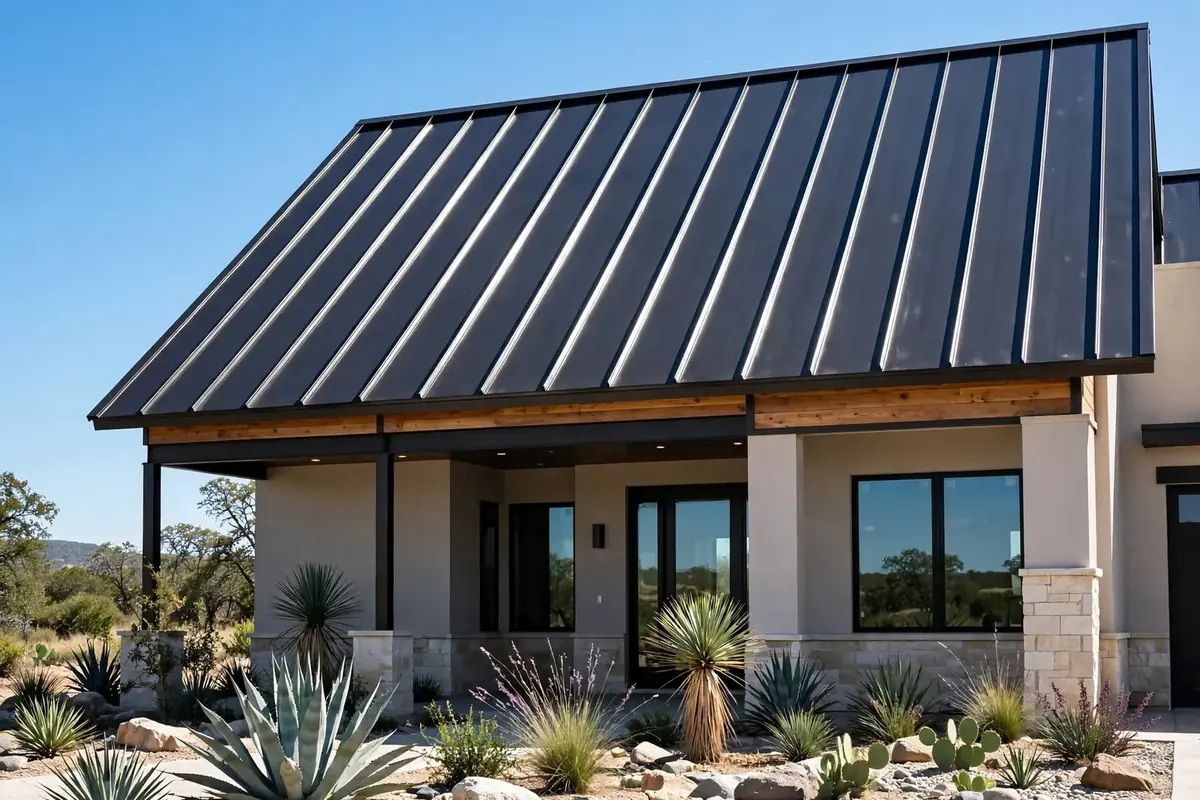
The direct answer for most people considering metal is this: it costs more to install than asphalt shingles, but it is chosen because the panels, seams and fixings are built to stay in service far longer between replacements — provided the panel type suits the building and the detailing is done properly.
Metal roofing is a long-lasting option that sheds rain and snow quickly and handles wind and hail differently from asphalt shingles. It comes in several profiles, from standing seam panels to corrugated and ribbed styles, and the right one depends on the building, the look you want and the budget.
Signs you may need metal roofing
- You want a roof that lasts longer between replacements
- A home or outbuilding is exposed to wind or heavy storms
- You prefer a modern or farmhouse style
- A flat-looking surface needs a better drainage path
- You are replacing a roof that has failed more than once
What our metal roofing work includes
- Review of panel type, gauge, finish and fastening method
- Installation over solid decking with proper underlayment
- Flashing and trim details at walls, valleys and penetrations
- Metal roofing for homes, garages, barns and commercial buildings
- A clear explanation of how metal differs in cost and upkeep from shingles
Standing seam vs exposed-fastener panels
The biggest decision in metal roofing is not the colour — it is how the panels are fixed, because that choice drives both maintenance and where each system suits best.
Standing seam panels
Standing seam panels are joined along raised seams that run from ridge to eave, and the fixings sit hidden beneath the seam or in a concealed flange. Because no screw heads are exposed to the weather, there are far fewer points where water can work in, and the panels are free to expand and contract with temperature through sliding clips. This is the lower-maintenance of the two systems and the one most often chosen for homes and for buildings where a clean, continuous appearance matters. The trade-off is a higher installed cost and fitting that needs to be precise.
Exposed-fastener panels
Exposed-fastener panels, including corrugated and ribbed profiles, are screwed straight through the face of the sheet into the structure below, with the screw heads and their sealing washers left visible. They install faster and cost less, which makes them a practical choice for barns, workshops, garages and other outbuildings. The maintenance difference is real, though: over years of heat and movement, washers can perish and screws can work loose, so these roofs benefit from periodic checks and re-tightening or replacement of fasteners before small gaps become leaks.
Looking after a metal roof
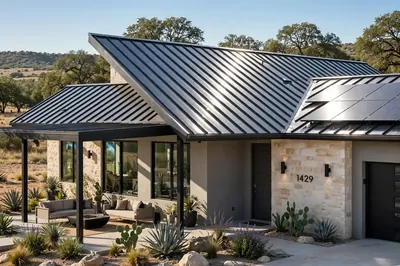
Metal needs less day-to-day attention than many materials, but it is not maintenance-free. Keep valleys and gutters clear so water is not held against seams, have scratches in the finish touched in before corrosion can start, and check sealant joints around penetrations as they age. On exposed-fastener systems, add the fastener check described above. A quick inspection after a major hail or wind storm will also catch dented trim or lifted flashing while it is still a small repair.
What to know in North Texas
Metal costs more upfront than asphalt shingles but is often chosen for its long service life. Most panels can be coated for solar reflectance, which can help in a hot Texas summer, and some insurers offer discounts for certain impact-rated panels, so confirm with your carrier. Rain can sound louder on metal if the attic and decking are not insulated.
How it works
- Call or send a requestTell us your address, what is happening and any photos you have.
- Roof inspectionWe look at the roof, find the cause and explain what we see.
- Written scope and quoteYou get the work, materials and price described before anything starts.
- Work and cleanupThe job is done, the property is cleaned up and we walk through the result.
When to call a professional about metal roofing
Get advice before committing if your roof has a low pitch, lots of intersecting slopes, or an existing covering you are hoping to keep underneath — each of those affects which panel system will work. It is also worth calling if an existing metal roof shows rust spots, backed-out screws or staining below a seam, as those faults are far cheaper to correct early. We will inspect the roof free of charge, explain the panel options in plain terms and confirm what our workmanship warranty covers. Start with our comparison of asphalt shingles and metal roofing for North Texas homes, or call (972) 853-6474.
Metal Roofing FAQs
Is a metal roof noisier in the rain?
With solid decking and attic insulation, the difference is often small. Noise depends on how the roof is built, not just the metal itself.
Does metal roofing attract lightning?
No. A metal roof does not raise lightning risk; it conducts a strike more safely than combustible material if one occurs.
Which lasts longer, standing seam or exposed-fastener metal?
Both use durable panels, but standing seam usually needs less upkeep over its life because its fixings are concealed and protected from the weather. Exposed-fastener roofs depend on screw washers staying sound, so they need periodic fastener checks to reach a comparable service life.
Can a metal roof be fitted over existing shingles?
In some cases yes, depending on the condition of the existing roof, the deck beneath it and local requirements. Fitting over shingles can save stripping the old roof, but any hidden deck damage goes unseen, so the existing surface needs a careful assessment first.
Does a metal roof need much maintenance?
Less than many other materials, but not none. Keep valleys and gutters clear, touch in scratches before corrosion starts, and have sealant joints and, on exposed-fastener roofs, the screws checked as they age. An inspection after a severe storm is also sensible.
Related roofing services
Helpful guides
Where we provide this service
We work throughout Dallas and nearby communities. Choose your city for local details.