
Roof Checklist After a Storm
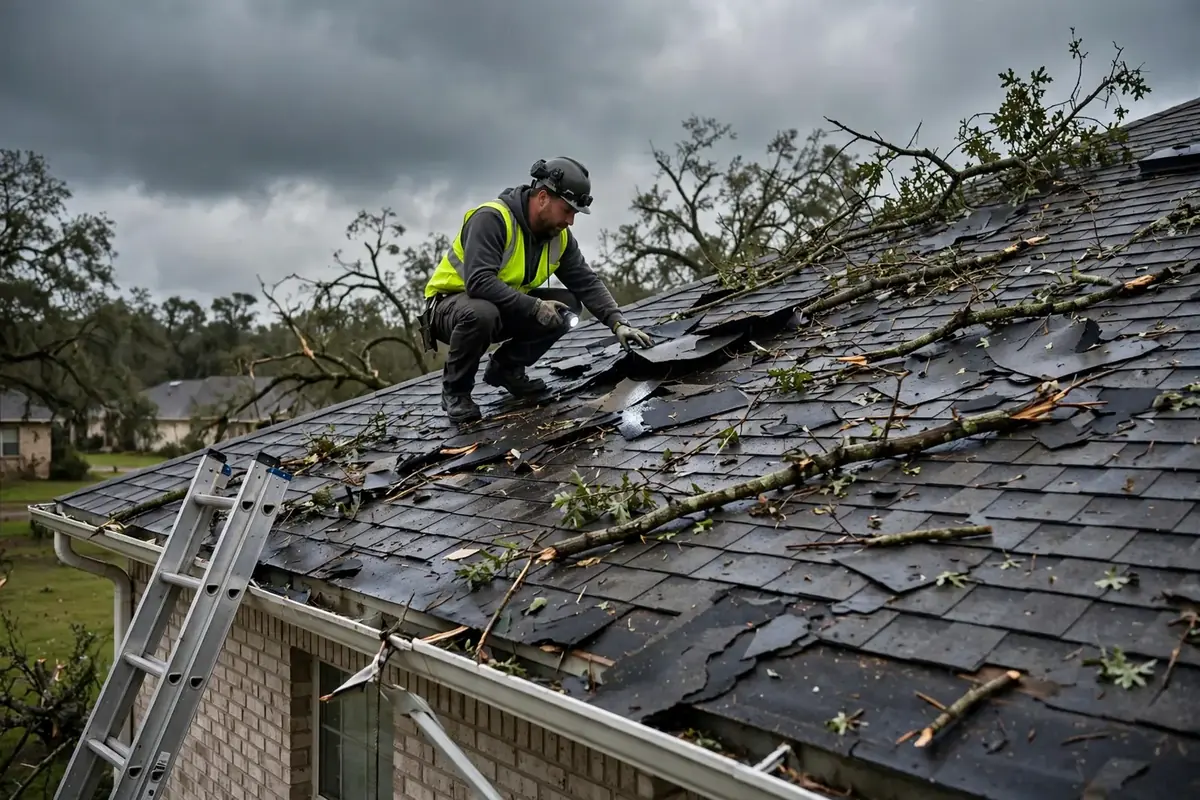
Direct answer: Once the storm has fully passed and it is safe outside, work in this order: check indoors for leaks and ceiling stains, walk the property looking at the roof, gutters and yard from the ground, photograph everything you find with the storm date noted, protect belongings if water is coming in, and then arrange an inspection for anything you spotted — or for any slope you could not see properly.
This checklist is a sequence for the hours after hail, high wind or heavy rain, not a roof inspection in itself. Stay off the roof and away from fallen lines and unstable branches; everything below can be done from the ground, from inside the house, or from the attic hatch.
Before you start: safety first
- Wait until thunder, lightning and high winds have completely passed
- Watch for fallen power lines, hanging branches and debris underfoot
- Do not climb onto the roof, a ladder against damaged gutters, or into a flooded attic space
- Keep children and pets away from any room with a bulging or dripping ceiling
From the ground
- Look for missing, lifted or creased shingles
- Check gutters and downspouts for dents and granules
- Scan the yard for shingle pieces and debris
- Check for fallen limbs on or near the roof
- Look at metal vents, chimney caps and flashing edges for dents or displacement
- Check fences, screens and outdoor furniture for hail marks that indicate the storm's strength
- Note which slopes faced the storm and which you cannot see from the ground
Walk the full perimeter rather than checking only the front. Wind damage often shows at corners, ridges and the edges where gusts get underneath, and the slope facing the weather usually carries the clearest signs. If hail fell, dented soft metals and granules at the downspout exits are your best ground-level evidence; our separate guide on how to spot hail damage on a roof explains how to read those marks in detail, so this checklist does not repeat that ground.
From inside
- Check ceilings and walls for new stains
- Look in the attic for daylight, damp insulation or dripping
- Smell for musty odors that suggest hidden moisture
Record what you found
- Photograph each item from the ground, then once more closer where you safely can
- Write down the storm date, the approximate time and the type of weather involved
- Keep any fallen shingle pieces rather than throwing them away
- Save receipts for buckets, sheeting or any emergency help you arrange
A dated record made on the day is far more useful than a description given weeks later, whether the next step is a repair quote or a conversation with your insurer about a possible claim. Check your policy's wind and hail terms after you have recorded the damage, not before you have looked.
What to do if you find damage
Photograph it, protect belongings from further water damage and call for an inspection. If there is an active leak or a hole, ask about temporary tarping. Water coming through the ceiling needs the immediate steps in our guide on what to do when your roof leaks before anything else on this page. For damage that is not letting water in, our storm damage roof repair service covers inspection, documentation and repair, and smaller isolated problems are dealt with as ordinary roof repair once the cause is confirmed.
When in doubt, have it checked
Small openings do not always leak right away, and damage that goes unnoticed gets worse with each rain. A quick inspection after major storms is cheap protection. Creased shingles can survive the storm that lifted them and fail in the next one, and a bruise in the mat may not let water through until the granules around it wash away. North Texas can deliver several storm systems in a single spring, so a check after a significant event is worthwhile even when the roof looks unchanged from the street — particularly the slopes and details you cannot see at all from the ground.
Worked through the list and found something, or simply want the unseen slopes checked? DFW Roofing LLC offers free inspections across Dallas and nearby cities, and we are open 24 hours. Call (972) 853-6474 with your storm date and checklist notes, and we will inspect the roof, explain what we find and agree the next step with you.
Common questions after a storm
How soon after a storm should I run this checklist?
As soon as the weather has fully cleared and it is safe to be outside. Running it the same day preserves the clearest evidence, including granules and debris that the next rain would wash away, and gives you a dated record while the details are fresh.
My roof looks fine from the ground. Could it still be damaged?
Yes. Hail bruises, creased shingles and lifted flashing are often invisible from street level, and some slopes cannot be seen from the ground at all. A clean ground check is reassuring, but after a severe storm an on-roof inspection is the only way to be certain.
Should I clear debris and shingle pieces away straight away?
Make the property safe and move anything that threatens further damage, but photograph the yard, gutters and roof first and keep fallen shingle pieces. Clearing everything before it is recorded removes evidence that helps a roofer, and an insurer, understand what the storm did.