
Asphalt Shingles or Metal Roof for North Texas Homes
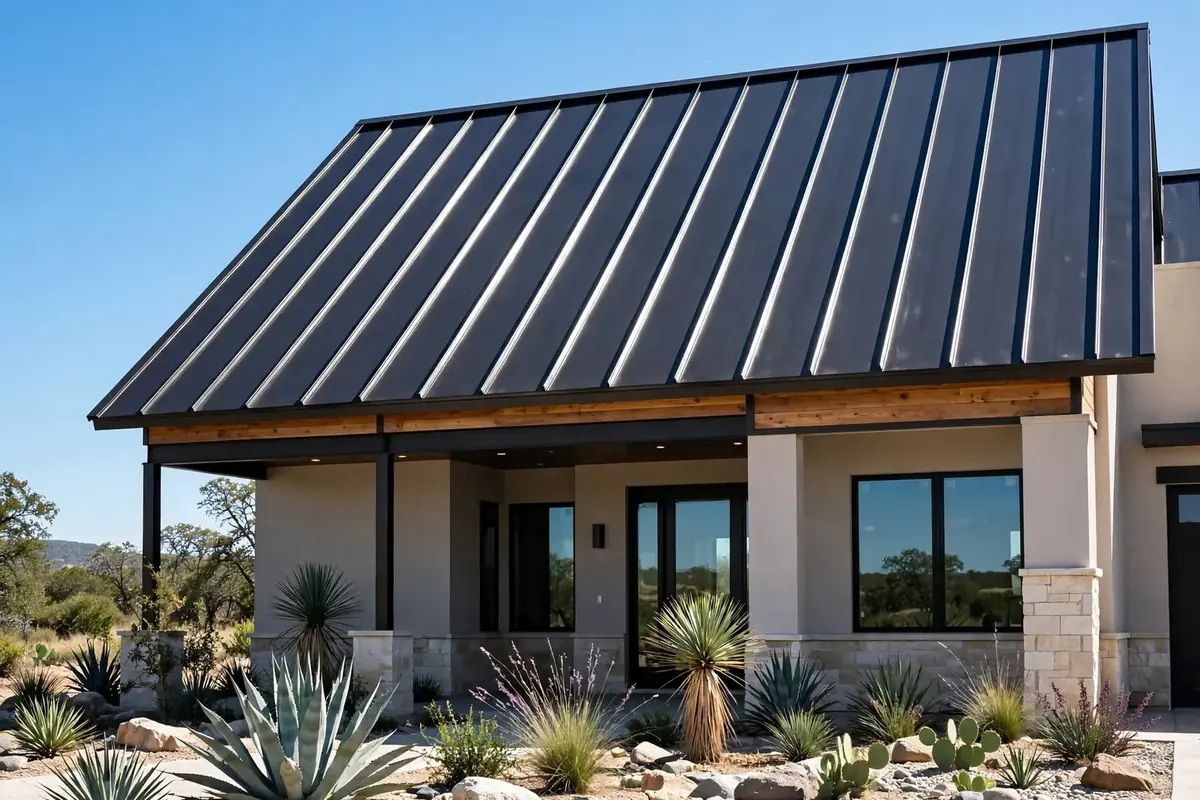
Direct answer: Choose asphalt shingles for the lower upfront cost, the widest choice of styles and straightforward sectional repairs. Choose metal for the longer service life, strong wind performance and quick shedding of heavy rain, accepting the higher installation cost. In North Texas, the deciding factors are usually how long you plan to keep the property, how exposed it is to hail and summer heat, and whether you value easier patching now or fewer interventions over the long term.
Neither material is best for every house. The comparison below works through how each behaves in this climate — heat, hail, wind and driving rain — so you can match the material to your roof, its pitch and your plans.
Asphalt shingles
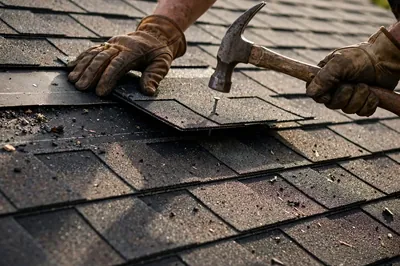
Shingles are the most common choice. They cost less upfront, come in many styles and can be repaired in sections. Their weak points are heat, hail and wind, which wear them faster.
The granular surface protects the asphalt layer from sunlight, so granule loss is the thing to watch: as it accumulates in gutters, the shingles beneath age more quickly in the Dallas summer. Architectural shingles are thicker than basic three-tab and generally stand up better to wind uplift and minor impacts. Impact-rated shingles are tested to resist cracking from hail strikes, which is worth asking about given North Texas storm seasons. Installation quality matters as much as the product: correct nailing, sealed tabs and proper attic ventilation all affect how long a shingle roof stays trouble-free. See what is included in our shingle roofing work.
Metal roofing
Metal costs more to install but typically lasts longer, sheds water quickly and handles wind well when properly fastened. Thin panels can dent in large hail, so ask about gauge and impact ratings.
Standing seam systems hide their fasteners under the seams, which removes a common maintenance point found on exposed-fastener panels, where screws and their washers need periodic checking as they age. Metal reflects more solar heat than a dark shingle, though attic ventilation and insulation still do most of the work of keeping heat out of the living space. Rain noise is often raised as a concern; over a solid deck with underlayment and an insulated attic, the difference indoors is usually modest. Repairs tend to involve individual panels or trim rather than small patches, which is one reason the installation detailing around valleys, ridges and penetrations matters so much. Our metal roofing page explains the systems we fit.
How each handles North Texas weather
Hail is the sharpest local test. On shingles, impacts bruise the mat and displace granules; our guide on how to spot hail damage on a roof explains what that looks like. On metal, the same storm is more likely to leave cosmetic dents than to open a leak path, though very thin panels dent more readily. Wind works the other way round in one respect: properly fastened metal panels present a continuous surface, while shingles depend on each tab staying sealed, so older shingles with failing sealant are the first to lift and crease in a gale. Both materials fail early if flashing and edges are poorly finished, whatever the covering itself.
- Cost: metal is usually higher upfront
- Lifespan: metal generally lasts longer
- Repairs: shingles are easier to patch
- Appearance: metal offers a modern or farmhouse look
Insurance
Some insurers give discounts for impact-rated roofing. Call your carrier before choosing a material so you know what applies to your policy.
Which should you choose?
It depends on budget, how long you plan to stay and the look you want. A roofer who offers both can explain the tradeoffs without steering you to only one. As a practical frame: if the house may be sold within a few years, a sound shingle roof usually serves the plan; if this is a long-term home and you want to reduce how often the roof needs attention, metal earns its higher starting cost over time. Roof pitch, overhanging trees, any homeowner association rules on appearance, and the condition of the existing decking all feed into the same decision and are best checked on site.
Still deciding between fixing the present roof and replacing it at all? Read roof repair or roof replacement: how to decide first. Then call DFW Roofing LLC on (972) 853-6474 for a free inspection: we fit both materials, so the recommendation follows your roof and your plans rather than a single product line.
Common questions about shingles and metal
Does a metal roof make the house hotter or noisier?
Metal reflects more sunlight than dark shingles, and attic ventilation and insulation remain the main controls on indoor heat. For noise, a metal roof fitted over a solid deck with underlayment, above an insulated attic, is usually only modestly different indoors from a shingle roof during rain.
Can metal roofing be fitted over existing shingles?
It is sometimes done, but it can hide decking problems and adds weight and height at edges and flashing. Removing the old covering allows the deck to be checked and the new system to be detailed properly, so the right approach depends on the condition found at inspection.
Which material is easier to repair after a storm?
Shingles are generally easier to repair in small sections, because individual shingles can be swapped. Metal repairs usually involve a panel or trim piece and matching its profile and finish. In both cases, flashing and edge damage should be repaired at the same time, not just the visible covering.