
Roof Repair or Roof Replacement: How to Decide
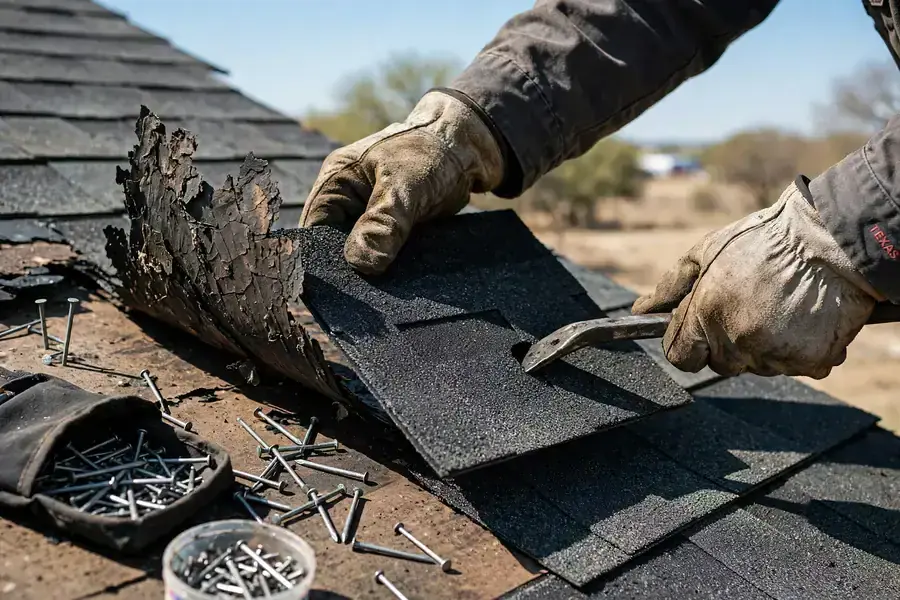
Direct answer: Repair the roof when the problem is localised — one failed flashing, a small group of damaged shingles, a single leak with a clear cause — and the rest of the covering is sound. Replace it when problems are spread across the roof: leaks returning in new places, shingles brittle or losing granules over whole slopes, or storm damage too widespread for patching to hold.
The decision turns on condition and spread, not on age alone or on a single leak. The sections below set out the signs on each side, and a free inspection that shows you the actual state of each slope is the most reliable way to settle it before you commit to either route.
Repair makes sense when
- The damage is limited to one area
- The rest of the roof is in decent condition
- The roof is well within its expected life
- The cause is a single failed part, such as flashing or a vent boot
Replacement makes sense when
- Leaks keep appearing in different places
- Shingles are brittle, curling or heavily worn across the roof
- Storm damage is widespread
- Repairs are starting to cost nearly as much as a new roof
Signs the problem is the roof, not the spot
Look beyond the immediate leak. Granules collecting heavily in gutters, shingle edges curling or cracking when lifted, soft or spongy decking underfoot, daylight showing through the attic boards and several past patches in different areas all suggest the system as a whole is wearing out. So does a pattern of repairs that each fix one spot while a new one appears elsewhere within a season or two. Those are general signs to discuss with an inspector, not a diagnosis you need to make from the ground.
The cost question, without invented figures
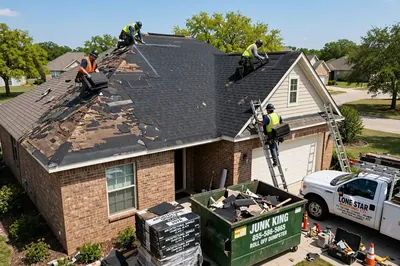
Compare like with like. A repair is usually the smaller outlay, but repeated call-outs, interior redecoration after each leak and shortened life for the remaining roof all add up over time. Replacement is the larger single project, yet it renews the full system — covering, underlayment, flashing and ventilation details — in one planned job rather than a series of urgent ones. Ask for the scope of each option in writing, including how damaged decking found during the work will be dealt with, so the comparison rests on what is actually included rather than on a headline figure alone.
The age question
Roof age alone does not decide it. A roof can age faster in a hot attic or after repeated storms, and a well-installed one can outlast the average. Ask the roofer to show you the condition rather than quote a number of years. In North Texas, sustained summer heat and repeated hail and wind events mean two roofs of the same age can be in very different condition, which is why the slope-by-slope state of the shingles, flashing and decking counts for more than the installation date.
Ask for it in writing
Whichever way you go, get the scope in writing: what will be repaired or replaced, which materials will be used, and how decking problems are handled if they turn up.
Explore both routes properly before deciding. Our roof repair page explains what a targeted repair covers, and our roof replacement page sets out what a full tear-off and new system involves. If you are weighing a replacement, our guide to asphalt shingles or metal roofing for North Texas homes compares the two main material choices for this climate.
DFW Roofing LLC will tell you plainly if a repair is enough. Call (972) 853-6474 for a free inspection, and we will show you the condition of each slope, explain which option the evidence supports, and put the scope in writing before any work starts. Our work is backed by a workmanship warranty and we are insured.
Common questions about repairing or replacing
Can a roof be partly replaced instead of fully?
Sometimes. Replacing one slope can work where damage is confined to that slope and the remaining roof is sound, but new and old coverings age and weather differently, and colours rarely match exactly. An inspection of every slope helps judge whether a partial approach is sensible or a false economy.
Does one leak mean I need a new roof?
No. A single leak with a clear cause, such as a split vent boot or failed flashing on an otherwise sound roof, is normally a repair. Leaks that keep appearing in different places, alongside widespread shingle wear, are the pattern that points towards replacement.
What should an inspection cover before I decide?
It should cover the condition of the covering on each slope, the flashing and penetrations, signs of decking damage, the attic side for moisture and daylight, and the history of previous repairs. You should come away knowing where the problems are and how widely they are spread.