
What to Do When Your Roof Starts Leaking
Direct answer: Contain the water first, then call a roofer. Move belongings out of the drip path, place a bucket under the leak, protect floors, and, if a ceiling bulges with trapped water, drain it carefully into a bucket through a small hole at its lowest point. Photograph the stain and drips, note when the leak started, and do not climb onto a wet roof.
Those steps limit indoor damage, but they do not fix the cause. Water often enters at a vent, flashing or damaged shingle some distance from where it appears indoors, so the lasting answer is an inspection that traces the entry point, followed by a proper repair once the roof is dry enough to work on.
Protect people and property first
Move furniture and valuables out of the way, put a bucket under the drip and lay towels or plastic sheeting on the floor. If the ceiling is bulging with water, carefully poke a small hole in the lowest point to drain it into a bucket, and stay clear of the area while you do it.
Stay off the roof
A wet roof is slippery and dangerous. It is better to leave the climb to a professional who has the right equipment.
The same caution applies indoors. Keep clear of a ceiling that is sagging heavily, switch off power to a fitting if water is running through or pooling near it and you can do so safely at the consumer unit, and do not place electrical items under an active drip. Avoid sealing the ceiling stain, repainting or fitting a bucket permanently in the attic as a substitute for repair: hidden moisture left in insulation and decking can damage timber and finishes long after the visible drip has stopped.
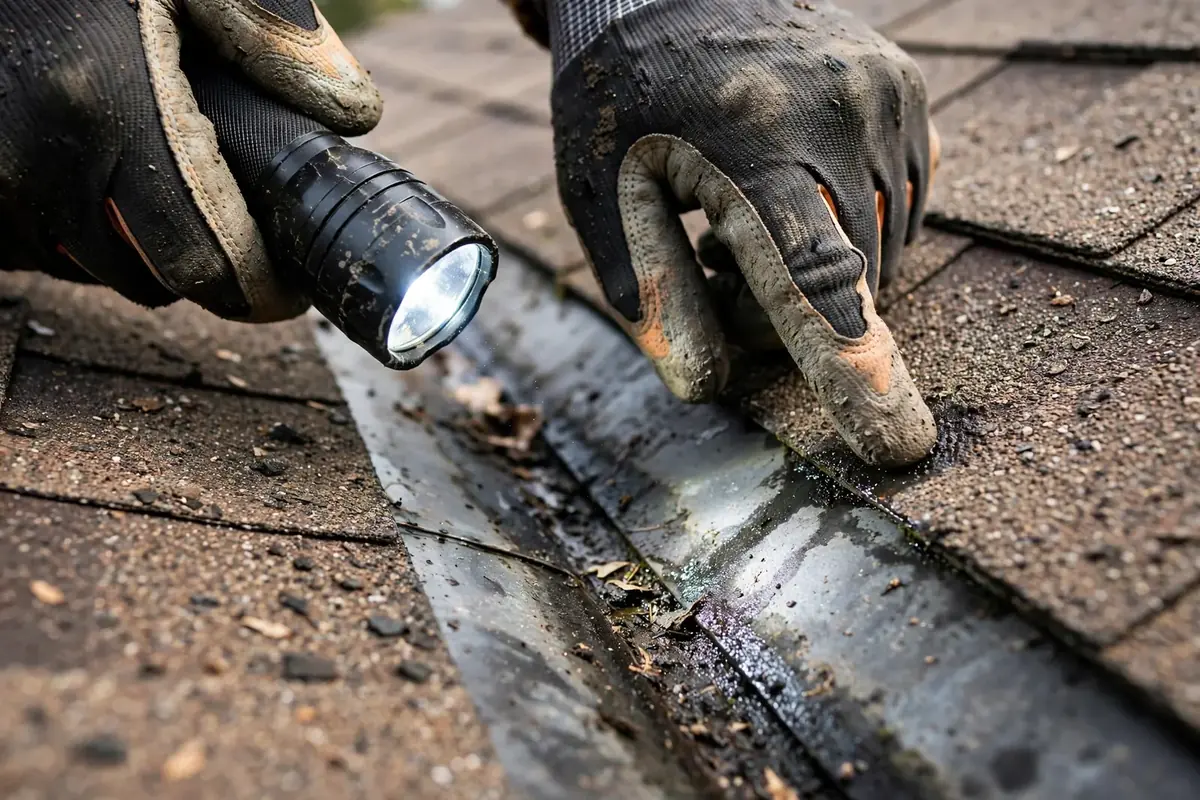
If it is safe to look into the attic with a torch, note where the decking or insulation looks damp and whether water appears to run down a rafter from higher up. Do not walk across attic joists or insulation to chase the trail. That observation, described to the roofer, is useful; a fall through the ceiling is not.
Document everything
- Take photos and video of the stain, drips and any damage
- Note the date and the weather when the leak started
- Keep receipts for any emergency supplies or repairs
Common causes behind a sudden leak
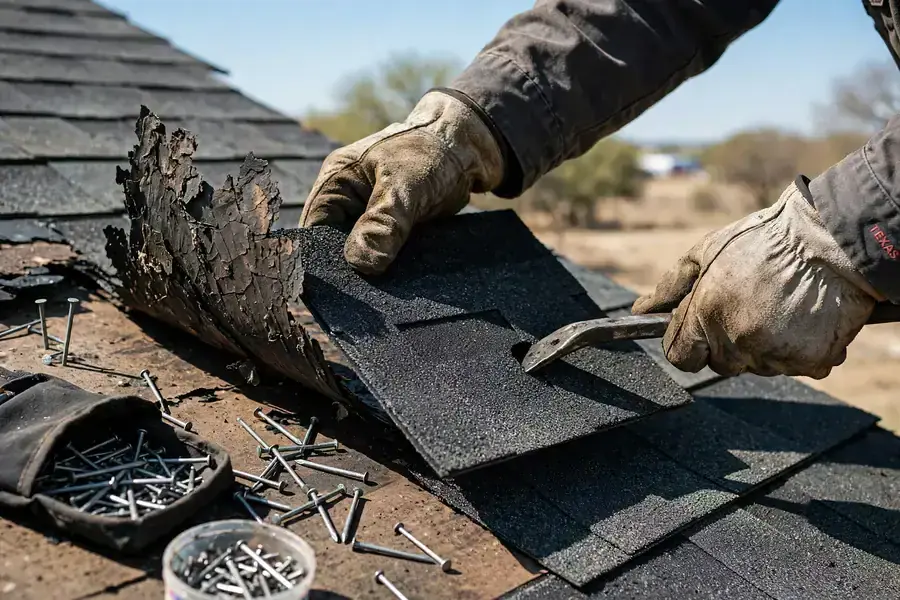
Most leaks trace back to a small number of failure points. Rubber vent boots split as they age in the Texas heat, flashing around chimneys and wall junctions lifts or corrodes, shingles go missing or crease in wind, and sealant at joints dries and cracks. On low-slope and flat sections, ponded water finds seams and penetrations that shed water perfectly well in light rain. Heavy, wind-driven North Texas rain exposes all of these at once, which is why a roof can seem fine for months and then leak in one particular storm direction.
Look for the cause, not just the spot
The place where water shows up inside is often not where it gets in. Water follows rafters and decking before it drips. A roofer can trace it back to a failed vent boot, damaged flashing or missing shingles. That tracing is the core of proper roof leak repair: fixing only the ceiling stain, or coating the nearest shingle, leaves the actual opening to leak again in the next storm.
Get a temporary fix, then a permanent one
If more rain is on the way, ask about tarping or temporary sealing. A permanent repair follows once the roof is dry and the cause is confirmed. When water is actively coming in, a tree has struck the roof, or part of the covering is missing, treat it as an emergency roof repair rather than a routine booking: the immediate aim is to make the opening weather-tight, then return for the permanent work. If the leak followed a storm and you have not yet checked the rest of the property, work through our roof checklist after a storm once conditions are safe.
DFW Roofing LLC is open 24 hours for calls about active leaks. Ring (972) 853-6474, describe where the water is showing and what the weather is doing, and ask for a free inspection so the entry point can be found and repaired at the source rather than patched at the stain.
Common questions about roof leaks
Should I try to find the leak myself?
You can safely note where water appears, check the attic from the hatch with a torch and photograph the damage. Finding the entry point itself usually requires roof access, because water travels along rafters and decking before it drips, so the opening is often some distance from the indoor stain.
Can a leaking roof wait until the rain stops?
The permanent repair usually has to wait for a dry, safe roof, but the call should not wait. Containing the water, documenting the damage and arranging temporary protection such as tarping limits further harm while the weather clears.
Why does my roof only leak in heavy rain?
Wind-driven rain can be pushed under lifted shingles and flashing that cope with ordinary rain, and heavy downpours expose ponding on low-slope sections. A leak that only appears in certain storms still has a physical cause that an inspection can locate.